
Pharmacy Fraud: Off-Label Dispensing, Kickbacks and False Claims
Pharmacy fraud includes dispensing drugs for uses federal programs do not cover, waiving copays to drive volume, billing for prescriptions never dispensed, and paying prescribers for scripts. Our attorneys obtained a 9 million dollar settlement in a case the government declined to join.
$9 million settlement in a non-intervened fentanyl qui tam case
Where pharmacy fraud arises
Specialty and mail-order pharmacies handle high-cost drugs under detailed coverage rules. The margin on a single prescription can be large, which creates pressure at exactly the points where the rules are most specific.
- Dispensing for off-label indications that federal programs do not cover
- Routinely waiving copays, which removes the patient check on unnecessary prescribing
- Billing for prescriptions that were never dispensed or never picked up
- Automatic refills the patient did not request and does not need
- Compounding drugs for reimbursement rather than clinical reasons
- Paying prescribers through speaker fees, consulting deals, or staffing support
- Switching patients to higher-reimbursement formulations without clinical basis
Off-label dispensing and the corresponding responsibility
A physician may prescribe off-label. A federal program is not required to pay for it, and a pharmacy that dispenses knowing the indication is outside coverage may be submitting false claims.
For controlled substances there is an additional duty. Under 21 C.F.R. 1306.04(a), a pharmacy shares a corresponding responsibility to ensure prescriptions are issued in the usual course of professional treatment. Filling scripts that are obviously outside legitimate practice breaches that duty.
A case we handled
Our attorneys obtained a 9 million dollar settlement in a non-intervened False Claims Act case against private equity firm Belhealth Investment Partners, its principals, and its pharmacy portfolio companies Linden Care and Quick Care.
The complaint alleged that between 2013 and 2016 the pharmacies dispensed thousands of prescriptions of Subsys, a rapid-onset fentanyl spray approved only for breakthrough cancer pain in opioid-tolerant adults, for off-label and non-medically necessary uses billed to Medicare, Medicaid, and TRICARE.
Two features make this case unusual. The government did not intervene, and we carried it anyway. And liability reached the private equity owner and its principals personally, not only the operating companies.
Private equity ownership does not shield the owner
Private equity has moved heavily into healthcare, and the Department of Justice has made owner liability a stated priority. Where a fund and its principals direct the scheme, they can be defendants rather than bystanders.
Our own case established exactly that. As Edward Kang put it at the time, private equity firms in healthcare must act with diligence, because trading patient safety for investor returns creates liability for the firm and for the individuals who direct it.
Who else is liable in a pharmacy scheme
Pharmacy fraud rarely involves one party. The prescription has to be written, filled, billed, and paid, and liability can attach at each step.
- The manufacturer, where it promoted the off-label use or funded the prescribing
- The prescriber, where scripts were written outside legitimate practice or in exchange for remuneration
- The pharmacy, for filling in breach of its corresponding responsibility and billing federal programs
- The pharmacy benefit manager, where formulary placement or rebate treatment was misrepresented
- The owner, where a private equity sponsor or parent directed the strategy
- Reimbursement support vendors, where they coached prior authorization language to secure coverage for uses not covered
Copay assistance and the reason it matters
Manufacturer copay coupons are lawful for commercially insured patients and unlawful for federal beneficiaries. The reason is structural rather than technical.
A copay exists so the patient has a reason to care what a drug costs. Remove it and the patient becomes indifferent between a 30 dollar generic and a 3,000 dollar branded product, while the federal program pays the difference. That is why routinely waiving copays for Medicare and Medicaid beneficiaries implicates the Anti-Kickback Statute.
The pattern that draws enforcement is a foundation or assistance program funded by a manufacturer and structured to support one product, with eligibility criteria narrow enough that the manufacturer is effectively paying the copays of its own patients. Pharmacy staff administering those programs see how the criteria work.
The Philadelphia pharmaceutical corridor
The pharmaceutical corridor running from Philadelphia through Montgomery and Chester counties and into central New Jersey is one of the largest concentrations of drug manufacturing, distribution, and specialty pharmacy in the United States.
That density matters for these cases in a specific way. Specialty and mail-order pharmacy operations serving national patient populations are frequently headquartered or operated from this region, which means conduct affecting Medicare and Medicaid beneficiaries across the country is directed from offices in the Delaware Valley. Venue for a False Claims Act case follows the defendant and the conduct, so those matters are properly brought here.
The region also carries a substantial contract research and pharmacy benefit management presence, both of which generate their own categories of claim.
Reading dispensing data as evidence
Pharmacy cases are unusually well documented, because dispensing generates a record for every transaction and pharmacies retain them under regulatory requirements.
The patterns that support a case are visible in that data. A single prescriber accounting for a disproportionate share of one high-cost product. Prescriptions concentrated in a diagnosis the drug is not approved for. Copays waived systematically for federal beneficiaries while commercial patients pay. Refills shipped on a schedule the patient never authorized. Fill patterns that continue after a patient has stopped responding to outreach.
A pharmacist who can describe those patterns from working knowledge, and point an investigator at where the data lives, provides more usable evidence than a stack of documents removed without authorization.
Frequently asked questions
I work at a pharmacy and we fill scripts that seem clearly inappropriate. Is that a case?
Potentially. If the prescriptions are outside the drug’s covered indication or outside legitimate professional practice, and claims went to a federal program, both False Claims Act and Controlled Substances Act issues arise.
Can the drug manufacturer be liable too?
Yes. Manufacturers that promote off-label use or pay prescribers have been defendants in many of the largest recoveries. The manufacturer of Subsys was itself the subject of federal action.
What if the government declines my case?
You may proceed on your own, and your share rises to 25 to 30 percent. Many firms drop declined cases. Ours obtained 9 million dollars in one.
Are copay waivers really illegal?
Routine waivers for federal program beneficiaries implicate the Anti-Kickback Statute, because the copay exists to make patients cost-sensitive. Documented, individualized financial hardship is treated differently.
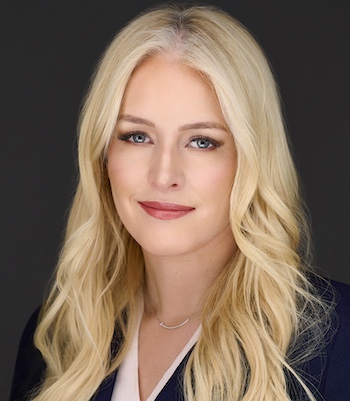
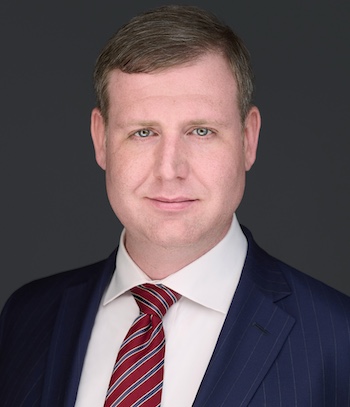
The attorneys who handle these cases

Related reading
Talk to a whistleblower attorney before you report
A conversation costs nothing and is confidential. We will tell you honestly whether what you have describes a case, and what the first-to-file rule means for your timing.